The Unified Vision
Lesson 10
You began this journey with a simple question.
How is reality possible?
Along the way, that single question unfolded into many others.
What is space?
What is time?
What is causality?
What is consciousness?
What is evolution?
What is the observer?
What lies beyond ontology itself?
At first, each of these questions appeared independent. Philosophy, science, psychology, metaphysics, and contemplative traditions seemed to describe different realities, using incompatible languages and pursuing incompatible goals.
Now, they no longer appear fragmented.
They reveal themselves as different perspectives upon one coherent whole.
Space and time become structural expressions of Manifestation.
Causality reveals itself as Formative Causality operating beneath every event.
Evolution becomes the gradual liberation of Actualization.
Consciousness is recognized as the silent witnessing ground of manifestation, never its product.
Ontology discovers its own legitimate boundary.
Beyond that boundary, the great symbols of the contemplative traditions suddenly become intelligible.
Brahman.
The Absolute.
The One.
God.
The Ground of Being.
The Incomprehensible.
Different names.
The same structural horizon.
What once appeared divided now reveals itself as one architecture.
The distinction between science and metaphysics softens.
The apparent conflict between rational inquiry and contemplative realization disappears.
Ontology respects religion.
Religion honors philosophy.
Science acknowledges mystery.
Reason embraces mystery.
Each simply occupies its proper place within one coherent vision of reality.
Perhaps the most unexpected discovery of all is this.
Nothing had to be rejected.
Nothing had to be abandoned.
Each discipline was incomplete only because it had been isolated from the others.
Once reunited, each reveals its proper function within a larger whole.
This is the essence of Polymetaphysics.
The reconciliation of existing knowledge.
The integration of isolated paradigms.
A framework capable of revealing why every philosophy exists, why each contains part of the same reality, and why none of them can contain reality in its entirety.
Finally, something even more remarkable becomes visible.
The architecture you discovered in the universe is the same architecture through which your own mind understands the universe.
The observer and the observed are no longer strangers.
The microcosm reflects the macrocosm.
The same structural principles organize both.
The map of reality and the map of understanding become one continuous landscape.
This is why Logical Gnosis is more than ordinary knowledge.
More than standard philosophy.
More than traditional ontology.
It is a transformation of perspective.
Reality has not changed.
You have.
And once this new perspective has been seen, it becomes remarkably difficult to return to seeing the world as a collection of disconnected fragments.
The journey therefore does not end here.
It begins here.
Because from this point forward, every philosophy you read, every scientific theory you encounter, every contemplative tradition you explore, and every experience you live becomes another opportunity to recognize the same hidden coherence from a new perspective.
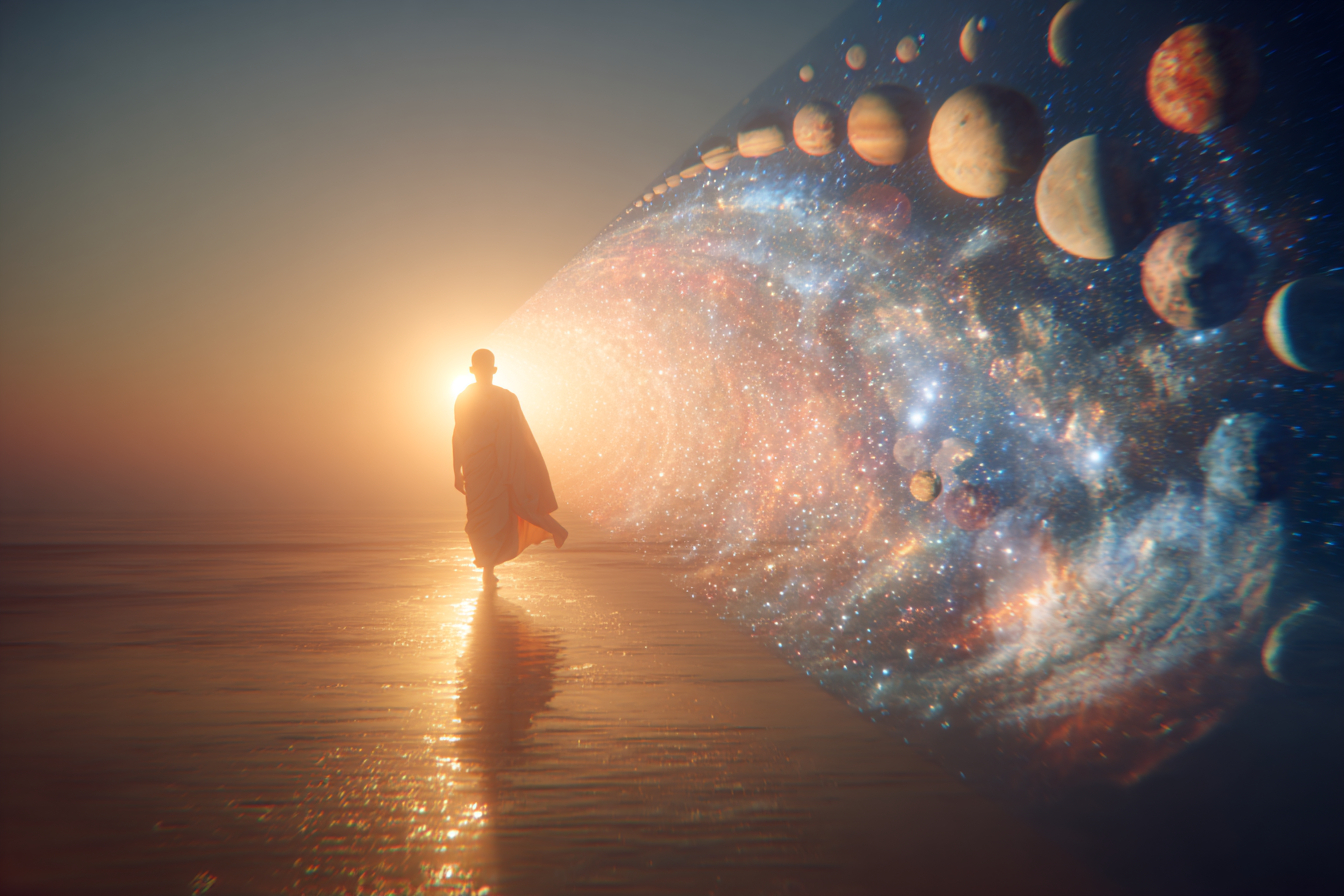
This is Logical Gnosis.
The end of old inquiry—
and the dawn of seeing.

Thank you to everyone who stayed with this journey from the first lesson to the last.
I sincerely hope these lessons were worth your time, and that the understanding you have reached will not simply remain on a shelf as another interesting idea. Logical Gnosis is not the end of a path—it is only its conscious beginning. It leaves you with deeper questions to pursue, greater clarity with which to pursue them, and a commitment to intellectual honesty throughout the process. If these lessons have helped you see reality, yourself, and the world from a broader perspective, then they have fulfilled their purpose. I hope you will carry this understanding forward and use it wisely, responsibly, and always with good intentions.
If the first course examined the fundamental architecture of reality, the second course turns that architecture inward.
“Self-Awareness & the Ontology of Belief” takes the same functions you have just encountered—Recall, Differentiation, and Actualization—and applies them directly to lived cognition. It asks how belief actually operates beneath conscious attention. It examines how a passing thought gathers momentum and becomes a stable worldview. It investigates how a passing state becomes appropriated as identity. Most importantly, it asks what becomes possible when the structures organizing your own experience can themselves become objects of awareness. The first course gave you the map. The second course teaches you to read the map of your own experience. Start Here
At the same time, the same architectural principles that illuminate the path of self-awareness also open new possibilities for scientific discovery, philosophical inquiry, and interdisciplinary research. Whether you choose to apply these principles within existing disciplines or contribute to the continuing development of Meta-Para-Ontology itself, they provide a powerful methodology for exploring unresolved questions and uncovering previously unseen structural relationships. Some of the most important discoveries enabled by this approach may still lie ahead, awaiting those prepared to pursue them. By revealing the hidden unity of reality across disciplines that have long developed in isolation, this methodology allows relationships between seemingly unrelated domains of knowledge to become visible for the first time.
Meta-Para-Ontology operates as an evolving framework whose greatest potential lies in generating new questions and opening new directions of inquiry. Its architectural principles provide a foundation for future investigation, continually expanding the horizons of research. Whether you are a physicist investigating the foundations of spacetime, a neuroscientist exploring consciousness, an evolutionary biologist studying the emergence of complexity, a systems theorist examining self-organization, a psychologist seeking deeper models of mind, or a philosopher reconstructing the conceptual architecture of reality, the same coordinate framework invites further exploration. Every discipline illuminates a distinct region of reality, yet each also carries unresolved questions whose structural interrelations often elude standard analysis. Meta-Para-Ontology provides a structural methodology for bringing those relationships into view, extending inquiry beyond the traditional boundaries separating academic fields.
Whether your future path leads toward scientific research, philosophy, psychology, cosmology, or contemplative practice, I hope Logical Gnosis will continue serving as a living instrument of discovery. Reality has always possessed a profound structural harmony. The journey ahead is the continuing discovery of that harmony throughout every domain of human knowledge. I wish you every success in that discovery.