Is There a God in This Ontology?
I. The Question Appears Naturally
Note: A sequential reading of the Meta-Para-Ontology series is advised for proper conceptual orientation. This text directly presupposes the architectural framework established in the preceding essay, “Meta-Para-Ontology: The Four Registers”.
As the internal architecture of Meta-Para-Ontology systematically unfolds, the analytical trajectory inevitably converges upon the fourth register — the threshold of Meta-Actualization. Within this metric domain, consciousness is fundamentally reassessed, no longer conceptualized as an entangled component within the operational mechanisms and structural forms that generate empirical experience. At this critical juncture, the constituent identification with phenomena undergoes a rigorous ontological differentiation, wherein awareness clarifies itself strictly as a non-participating, witnessing presence, standing distinct from any specific spatiotemporal configuration of mind, body, or world. By mapping the precise trajectories through which reality transitions from sheer potentiality and formative constraints to dynamic physical manifestation, the framework reaches its structural and systemic completion. Consequently, no further parameters can be introduced onto this horizontal coordinate grid without fundamentally undermining the coherent ontological method that enabled this very clarification.
Precisely at this structural limit, where thought encounters the ultimate boundaries of description, a profound inquiry emerges as an imminent necessity dictated by the internal consistency of the grid itself, directing the intellect toward that which lies immediately beyond the horizon of formal categorization. This boundary threshold has appeared repeatedly throughout the history of speculative philosophy and contemplative inquiry; whenever reflection arrives at the exact coordinates where consciousness recognizes its fundamental alterity from the structures of manifestation, thought encounters an epistemic precipice. Within these specific coordinates, religious and metaphysical traditions traditionally introduce the vocabulary of the Divine, articulating this limit through concepts such as the Absolute, the One, Brahman, or God.
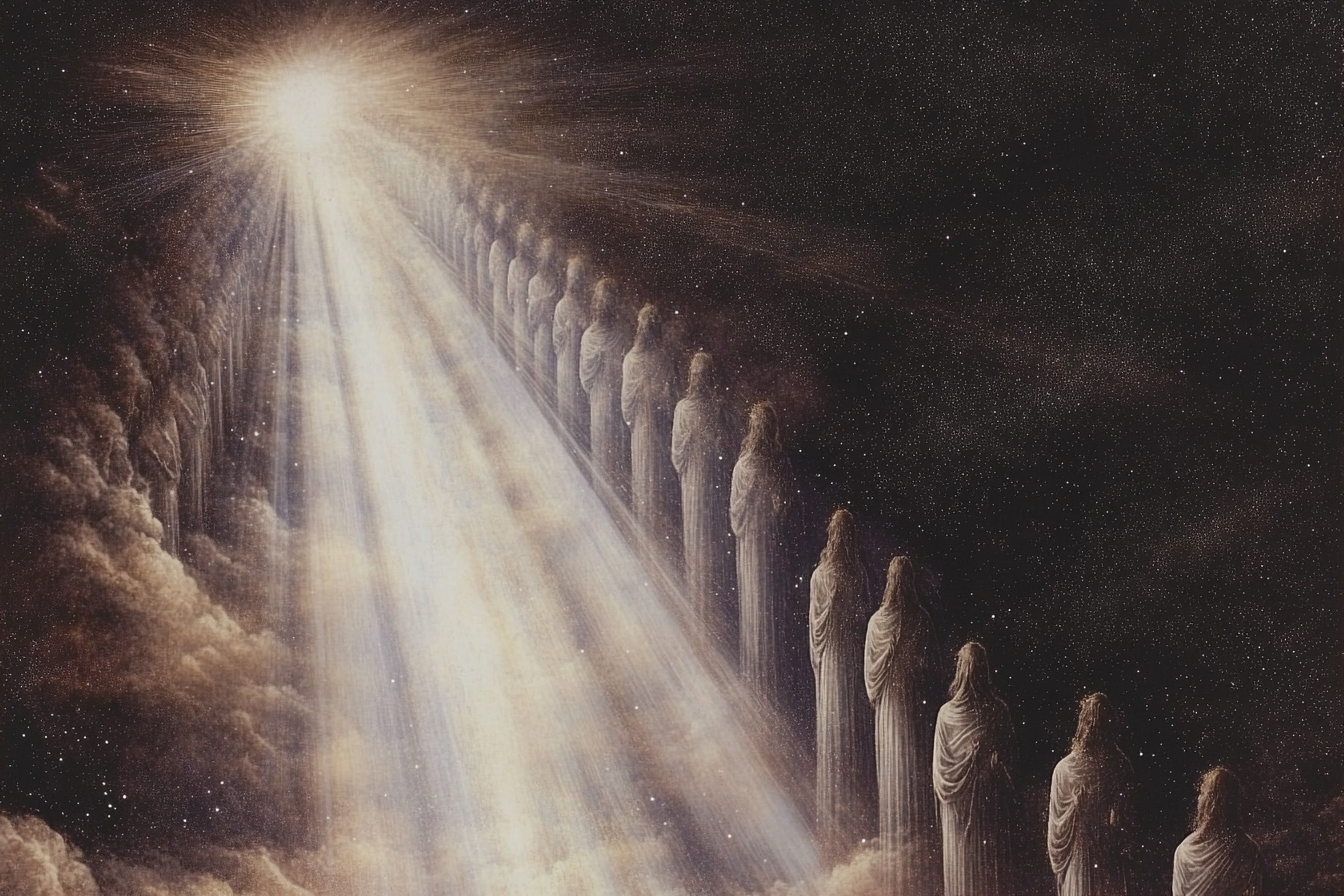
The question of the Divine enters Meta-Para-Ontology as a structural necessity, emerging at the exact point where our mapping tools reach their limit. This dimension of reality remains implicitly operative through every phase of existence, because objective physical form cannot achieve empirical stability without consciousness acting as its prior, witnessing ground. Reality unfolds for awareness, persisting as a direct field of experience long before the intellect begins to analyze or name it. The threshold of Meta-Actualization does not introduce a new metaphysical entity; it simply uncovers what has been functioning from the very beginning — the recognition of consciousness in its original nature as Pure Awareness, identified in Indian metaphysics as Atman or Purusha.
In short, the structural completeness of Meta-Para-Ontology directly demands the recognition of a supreme Divine principle. When the horizontal scale of registers reaches its ultimate boundary, the framework transcends description, pointing toward an unmanifest source that underpins all cosmic order. In the light of Indian metaphysical traditions, this ultimate reality finds its expression as Pure Consciousness, converging with the supreme reality of Parabrahman. Thus, the question of God is not an afterthought, but the essential keystone that anchors the entire architecture of being.
The emergence of the Divine horizon persists as an unavoidable consequence implicit within the very mechanics of the architectural grid. Because the phenomenological presentation of reality fundamentally presupposes consciousness as a prior witnessing presence, and because Meta-Actualization explicitly clarifies this awareness in its primordial nature, the historical intuition of the Divine reveals itself as an inevitable boundary of inquiry. However, this foundational presence resists description within the standard ontological protocols that govern the preceding registers. Ontology operates strictly through the criteria of distinction, relation, and metric determination; consequently, where formal differentiation no longer applies, conceptual articulation naturally loses its structural grounding. Any attempt to codify the Divine as a localized object, a formal principle, or a systemic component inevitably reduces that which transcends manifestation to the metrics of manifestation itself.
To prevent this distortion, the architectural restraint demonstrated by Meta-Para-Ontology remains entirely deliberate. This systemic openness signifies absolute precision rather than structural incompleteness. The coordinate grid accurately indicates the precise locus toward which religious and contemplative traditions gesture, while intentionally refraining from transmuting that indication into a dogmatic closure. By maintaining this rigorous threshold, the framework ensures that philosophy remains structurally faithful to its own methodological boundaries. What transcends conceptual determination is thus preserved in its genuine, unconditioned openness, shielded from premature and reductive definitions.

II. Why Ontology Cannot Describe the Beyond
The question of the Divine converges directly upon the threshold of Meta-Actualization — the fourth register, where consciousness recognizes its fundamental freedom from the underlying dynamics of manifestation. Having mapped how reality moves from hidden potential into visible presence, the ontological framework reaches its natural boundary. This limit marks the boundary of what language can systematically describe, without exhausting existence itself. Ontology operates entirely through boundaries, relations, and structures; to describe anything ontologically requires drawing lines and defining systems within the physical order. Beyond this fourth register, however, these fixed coordinates lose their validity. Any attempt to categorize the Divine as a localized object, a static principle, or a defined structure inevitably reduces that which transcends the grid back to the finite rules of the phenomenal world.
The resistance of the transcendent domain to dogmatic conceptual fixation guarantees its genuine accessibility, preserving it from the constraints of rigid metaphysical architecture. Maintaining total theological neutrality, Meta-Para-Ontology maps the historical and experiential expressions through which human traditions approach this threshold. Within this framework, religious and contemplative lineages emerge as subjects for rigorous examination through the objective prism of the ontological registers. Their symbols, doctrines, and core practices operate as structured attempts to articulate specific modes of experience wherein consciousness explicitly recognizes its fundamental autonomy from the phenomenal domain, encountering the ultimate limits of description. The divergence between historical traditions arises because each system formulates its respective dogmas from a distinct ontological standpoint, elevating a particular threshold of experience to a foundational status. The application of the coordinate grid reveals profound points of structural intersection and shared orientation, demonstrating a deeper alignment even where traditions remain conceptually and doctrinally distinct.
The inherent diversity of religious metaphysics establishes a rigorous field of active investigation, rendering obsolete the conventional impulse to view doctrinal variance as a problematic contradiction. Meta-Para-Ontology actively engages with this diverse domain, providing the universal coordinate architecture through which these historically distinct teachings are systematically compared, interpreted, and understood, while completely avoiding the dual errors of premature reductive unity and artificial opposition. Consequently, the systemic resistance to defining the Divine dogmatically operates as a profound operational strength of the framework. By steadfastly refusing to convert that which exceeds formal determination into a fixed and static doctrine, Meta-Para-Ontology preserves the essential openness required for genuine metaphysical exploration. The inquiry thus continues unabated, utilizing the precise descriptive capacity of the registers to illuminate exactly how different traditions navigate, structure, and approach that which remains fundamentally beyond descriptive reach.
Consequently, the structural boundary revealed at the threshold of Meta-Actualization establishes a vast and luminous horizon rather than a definitive endpoint. Within this expansive domain, philosophical reflection, comparative analysis, and spiritual interpretation achieve a rigorous structural continuation, seamlessly integrated through a holistic and unified ontological vision. Meta-Para-Ontology approaches the historic diversity of metaphysical teachings with total ontological neutrality, recognizing these traditions as distinct experiential vectors arising naturally within a shared existential field. By tracing exactly how disparate spiritual systems orient their doctrines in relation to the four fundamental registers, the framework discloses profound structural correspondences and an underlying continuity that remains obscured by mere surface-level dogmatic comparisons.
The unity that ultimately crystallizes within this coordinate architecture operates through a deeper mechanism than the artificial reconciliation of conflicting dogmas. It reveals itself through the direct, transparent recognition of a common ontological ground. In this light, the entire multi-dimensional cosmos — extending from the unmanifest potential of the first register, through the formative matrices of the second and the physical manifestation of the third, to the self-luminous witness of the fourth — stands as a coherent architecture. By safeguarding the inviolable mystery of the Beyond while mapping the manifest order with clinical precision, Meta-Para-Ontology fulfills its foundational architecture: it allows reality to be fully known, fully mapped, and ultimately unified in the silent presence of Pure Consciousness.
III. Religion and the Limits of Description
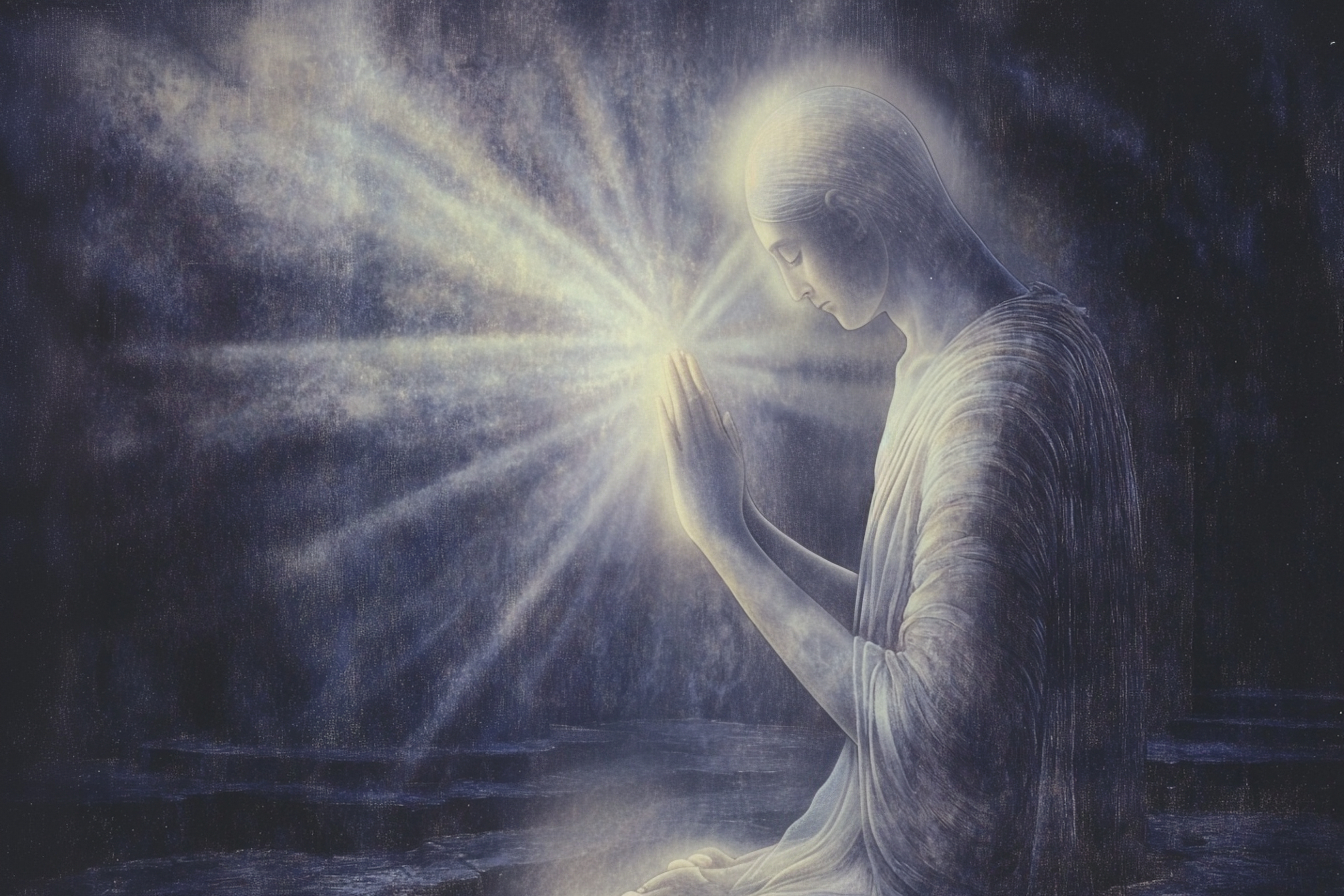
The conclusion of the ontological mapping at the boundary of Meta-Actualization inevitably brings us to a foundational question: if formal description must end where differentiation disappears, why do religious and contemplative traditions continue to speak so extensively about what exceeds all parameters? The historical persistence of sacred language across diverse cultures and eras is an inevitable metaphysical necessity. Throughout history, these teachings have emerged as direct expressions of profound experiences wherein consciousness recognizes its fundamental autonomy from the deterministic structures of manifestation and the constraints of the physical mind. At this precise threshold, ordinary cognitive categories and mental distinctions lose their stability. The intellect encounters an ultimate presence that cannot be captured through the conventional rules of objects, relations, or causation, yet this presence remains so deeply foundational that it compels the mind to generate symbols, myths, and doctrines to point toward the unnamable locus of its own origin.
At this threshold, formal language reaches the limit of its relevance. Here, literal description fails, and language becomes metaphoric and symbolic, expressing itself through concepts such as Brahman, Shiva, the Absolute, or the Divine. These terms demonstrate the boundary of all descriptive capacity, conceptualizing and framing that which lies entirely beyond formal representation. Transitioning from ordinary descriptive language into metaphysical markers of symbolism, these concepts establish a direct orientation toward the Divine. They define trans-ontological domains through symbolic frameworks that consciously outline a comprehensible contour, marking, yet never enclosing, the inexhaustible nature of the Absolute.
Within the analytical framework of the polymetaphysical system of Meta-Para-Ontology, these diverse expressions clarify themselves as distinct responses to the singular structural boundary revealed by the register of Meta-Actualization. While historical traditions employ variant metaphors, cosmologies, and theological vocabularies, they simultaneously gesture toward a primary domain that inherently resists stabilization within determinate concepts. This structural mechanism illuminates both the immense richness and the surface diversity of religious metaphysics; because that which is indicated transcends absolute formal determination, traditions naturally develop unique symbolic frameworks shaped by culture, language, and specific philosophical emphasis. The resulting plurality of religious expressions therefore reflects a necessary variation in how the threshold of articulation is approached and interpreted, rather than a fundamental contradiction at the core of the existential experience itself.
Meta-Para-Ontology positions these historical traditions strictly as interpretive endeavors emerging at the exact locus where formal ontology encounters its foundational limit. Within this coordinate framework, religious and contemplative discourse clarifies itself as a legitimate continuation of metaphysical inquiry through alternative modalities. This transition shifts the focus of exploration from rigid conceptual definitions to symbolic, experiential, and contemplative dimensions of understanding. By treating these sacred systems with total ontological neutrality, this paradigm validates their structural role as essential human pathways designed to navigate the boundary of manifestation, allowing the intellect to maintain a coherent relationship with the unmanifest source without reducing its vastness to competing dogmatic claims.
Religion emerges at the precise threshold where human reason fully recognizes the limits of its own descriptive method. Within this zone, formal logic reaches its operational boundary, and conventional language inevitably breaks down when facing that which resists rational categorization, dissolving into metaphysical images, symbols, and meanings.
Consequently, Meta-Para-Ontology maintains a position of total structural neutrality, neither dismissing theological claims as irrational anomalies — which are often excluded from strictly rationalistic discourse — nor dogmatically affirming them as absolute truths. The coordinate grid of ontological registers acts as an epistemic prism, clarifying the precise conditions under which these claims arise and mapping the structural role they play as human tools designed to help consciousness recognize its own nature, which inherently exceeds formal determination. Within this coordinate architecture, the vast inheritance of religious traditions ceases to operate as an obstacle to philosophical clarity. Instead, these teachings reveal themselves as indispensable and sacred records of humanity’s timeless engagement with the ultimate boundary of being. They preserve the exact footprints of the intellect at the very threshold where formal ontology reaches its completion, and where description naturally gives way to direct, lived realization.
IV. The Paradox
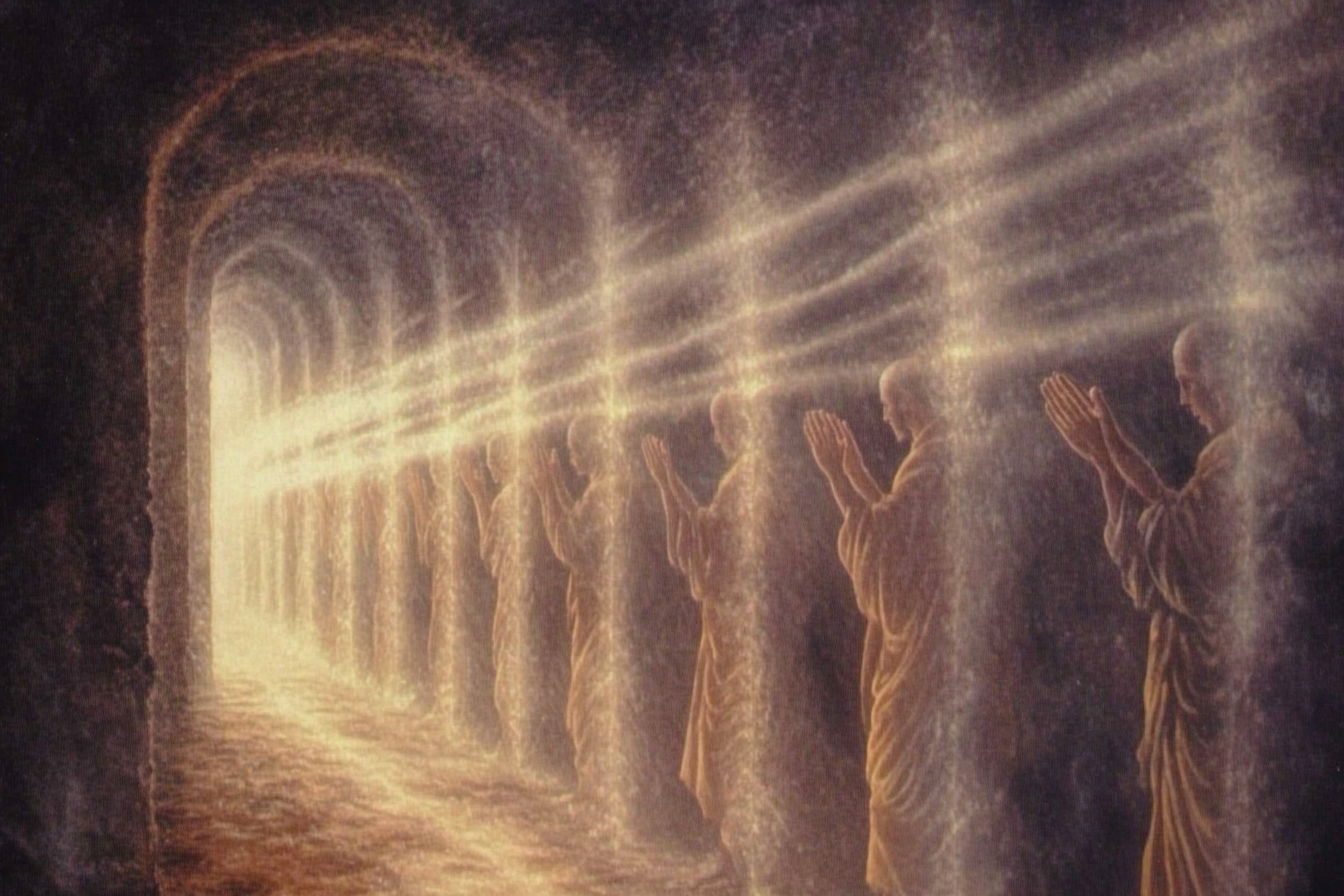
When conventional language and the categories of the physical mind attempt to address that which transcends all descriptive parameters, ultimate reality cannot be adequately adapted within the manifest order. Because the unmanifest source stands entirely prior to the dualities and change, any conceptual articulation inevitably polarizes this supreme reality, redefining it as an interpretation. Consequently, the historical divergence of sacred teachings reflects the very nature of this non-dual limit, producing frameworks that appear contradictory to the analytical intellect yet remain fundamentally bound to the same unconditioned source.
Certain traditions affirm an absolute unity.
Others maintain an irreducible distinction between consciousness and manifestation.
Still others insist that unity and difference must be affirmed simultaneously.
The analytical framework of Meta-Para-Ontology demonstrates that this diversity of spiritual doctrines operates as a profound structural condition, overriding historical accidents or mere cultural variance. At the boundary threshold of Meta-Actualization, all conventional forms of conceptual determination reach their absolute limits. The fundamental categories through which human thought normally functions — such as identity and difference, subject and object, or unity and multiplicity — cease to operate in their ordinary, deterministic way. Yet, the human intellect cannot entirely abandon these structures, because they remain the only available instruments of articulation. As an inevitable result of this cognitive boundary, historical traditions are forced to articulate the trans-ontological domain through the conceptualization of specific aspects, as the analytical intellect cannot simultaneously encompass the absolute, paradoxical fullness of the one reality.
Indian metaphysical traditions provide exceptionally clear expressions of this structural tension, mapping the precise trajectories assumed by the intellect at the limits of description. Within this landscape, Advaita Vedanta prioritizes absolute unity, establishing Brahman as the sole reality while interpreting cosmic multiplicity as a dependent appearance. Conversely, dualistic lineages accentuate the pole of distinction, preserving an enduring and irreducible difference between witnessing consciousness and the manifest world. Between these foundational coordinates emerge a spectrum of integrative approaches — including Vishishtadvaita and various schools of Bhedabheda — which actively articulate a relationship wherein identity and separation coexist without collapsing into one another. The school of Acintya-bhedabheda brings this operational challenge to its most explicit formulation by declaring the simultaneous unity and difference of reality to be ultimately inconceivable. Similarly, Kashmir Shaivism presents the supreme principles of Shiva and Shakti as inherently inseparable yet eternally distinguishable; consciousness and its intrinsic power of manifestation remain profoundly undivided, while resisting any reductive collapse into a flat and simple sameness.
The architectural coordination of Meta-Para-Ontology positions these diverse teachings as valid interpretive responses to the same structural boundary, completely bypassing the conventional impulse to judge them as competing metaphysical solutions. The paradox arises because unity belongs inherently to realization and trans-ontological experience, while difference belongs strictly to manifestation and the domain of ontology as a whole. When articulated through conceptual frameworks, each perspective appears incomplete on its own; a commitment to pure unity risks dissolving manifestation into absolute illusion, whereas an exclusive focus on pure difference risks severing the manifest order from its foundational ground. Consequently, the fullness of reality reveals itself only when both poles remain in dynamic, active tension, allowing the intellect to honor the metrics of the manifest world while remaining anchored to the non-dual truth of its unmanifest source.
Meta-Para-Ontology intentionally preserves this supreme paradox within its structural architecture, recognizing that any conceptual resolution would inevitably reduce that which exceeds determination to a singular, finite form. The registers systematically clarify the exact coordinates where trans-ontological unity becomes evident and where formal ontological difference operates, allowing both principles to manifest simultaneously without forcing their artificial reconciliation into a dogmatic doctrine. In this way, the apparent disagreement between historical traditions becomes thoroughly intelligible. Each lineage speaks truthfully from its specific orientation toward the same shared boundary, elevating an essential aspect of a multi-dimensional reality that can never be fully exhausted by any single conceptual formulation.
The paradox is therefore not a problem awaiting solution, but a sign that inquiry has reached the limit of conceptual determination. What appears as contradiction from within thought reveals itself, at this threshold, as the coexistence of perspectives required to approach what cannot be fully contained within thought itself.
V. Philosophical Parallels to the Incomprehensible
The structural mapping of the registers inevitably leads Meta-Para-Ontology to the exact boundary where formal description clarifies its own inherent limits. Beyond the threshold of Meta-Actualization, conceptual determination naturally ceases to provide an adequate methodology for description. This realization resonates universally across diverse historical epochs and independent intellectual lineages; whenever rigorous thinkers approach the absolute limits of rational inquiry, they encounter an identical epistemic condition wherein reality appears profoundly intelligible, yet entirely inexhaustible by conceptual thought. Treating this boundary threshold as a rigorous baseline verified by the history of philosophy reveals how different traditions have navigated this limit independently. By examining these structural parallels, the coordinate grid maps how the supreme paradox of the unmanifest source has been translated across variant conceptual languages without losing its essential trans-ontological weight.
Nicholas of Cusa: The Coincidence of Opposites
A strikingly early philosophical articulation of these descriptive limits appears within the Renaissance thought of Nicholas of Cusa (1401–1464), whose historical trajectory uniquely integrated advanced scholarship, theology, mathematics, and political statecraft. Moving within the intellectual transition from medieval scholasticism to early modern philosophy, Cusa sought a rigorous modality of knowledge capable of reconciling empirical rational inquiry with the profound mystery of the unmanifest Divine. His foundational work of 1440, “De Docta Ignorantia”, systematically establishes the paradoxical thesis that supreme human wisdom consists precisely in the conscious recognition of the intrinsic limits of finite understanding when it encounters the Infinite. At this strict cognitive threshold, distinctions that appear irreconcilably opposed within the metrics of finite reasoning begin to converge. Cusa formalizes this boundary condition as the “coincidence of opposites” (“coincidentia oppositorum”) — the definitive realization that ultimate reality completely resists expression through mutually exclusive conceptual categories.
The precision of this historical insight is anchored within his own writings, where he states:
“The precise truth shines incomprehensibly within the darkness of our ignorance.”
(De Docta Ignorantia, I.26)
And elsewhere:
“The infinite, as infinite, is unknown; for it escapes all comparison.”
(De Docta Ignorantia, I.13)
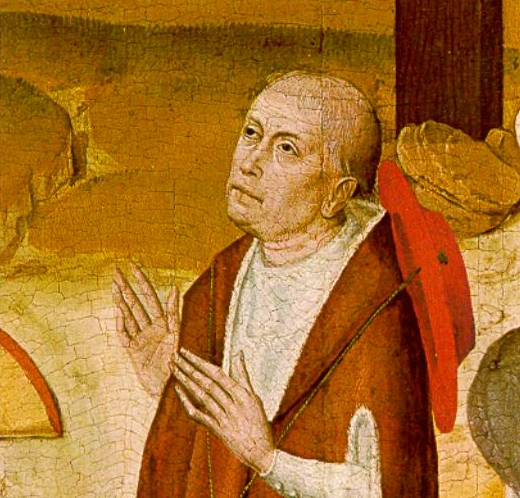
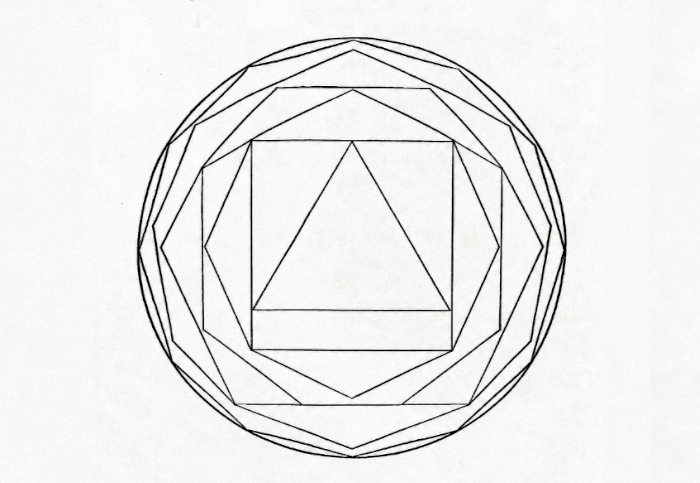
This recognition of descriptive limits represents the ultimate fulfillment of reason, as the intellect accomplishes its foundational task by discovering that ultimate reality completely resists containment within determinate concepts. Finite thought functions intrinsically through the metrics of comparison, measurement, and differentiation, whereas the Infinite necessarily exceeds all such relational structures. Nicholas of Cusa masterfully illustrates this operational mechanic through mathematical imagery, comparing human knowledge to a polygon with an indefinitely increasing number of sides; just as the polygon perpetually approaches the perfect form of a circle without ever becoming identical to it, the intellect endlessly multiplies its dual concepts without ever exhausting the ultimate truth. It is precisely through this infinite approximation that the mind encounters its definitive limit, where the apparent contradictions of the manifest order reveal the absolute boundary of formal thought. Consequently, the coincidence of opposites (coincidentia oppositorum) marks the exact coordinate where the finite intellect recognizes the boundary of its own mode of knowing, transmuting conceptual exhaustion into a structured gateway toward trans-ontological realization.
Semyon Ludwigovich Frank: The Incomprehensible
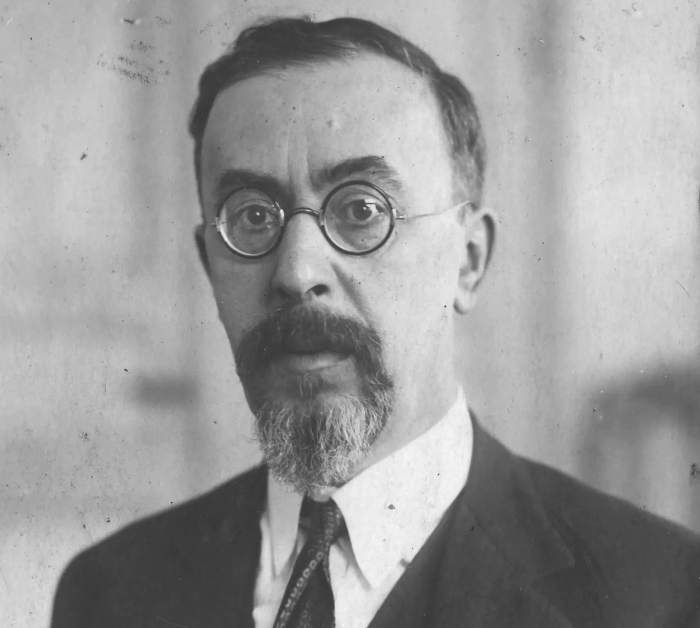
A remarkably precise modern parallel to these structural inquiries emerges within the work of Semyon Ludwigovich Frank (1877–1950), a preeminent representative of twentieth-century European religious philosophy whose thought developed at the fertile intersection of classical metaphysics, early phenomenology, and profound spiritual reflection. Expelled from Soviet Russia in 1922 aboard the historic “philosophers’ ship” alongside many leading intellectuals of his era, Frank was forced to navigate the uncertainties of lifelong exile across Germany, France, and England. This profound experience of displacement infused his philosophy with an acute existential seriousness, transforming the search for the ultimate ground of reality into an immediate existential necessity rather than a detached theoretical exercise. The culmination of his mature thought achieves its most concentrated expression in his 1939 masterpiece, “The Incomprehensible” (“Nepostizhimoe”), wherein Frank systematically confronts the central paradox of global epistemology: the mechanism through which reality remains genuinely knowable while simultaneously exceeding every intellectual attempt at conceptual determination.
Frank anchors this boundary condition with exceptional conceptual clarity, writing:
“The incomprehensible is not the unknown, but that which is known as exceeding every determinate content of knowledge.”
Within Frank’s metaphysical architecture, the Absolute operates as the living, immediate ground of all cognition, rather than a hidden or inaccessible object sequestered behind the veil of reality. Conceptual thinking functions by necessity through the protocols of distinction and definition, isolating specific aspects of the manifest order to render them intelligible to the intellect. Yet, the primordial fullness of being fundamentally precedes these mental divisions and inherently resists exhaustibility by them.
As he precisely observes:
“Reality is richer than any concept that seeks to grasp it.”
This structural insight establishes a rigorous epistemic position that transcends the conventional dichotomies of rationalism and irrationalism. The ultimate ground of reality stands in harmony with reason while simultaneously exceeding its descriptive parameters, manifesting a modality of knowledge that exists as a direct, unmediated participation in being — a living presence that philosophy can accurately indicate but never fully contain. Consequently, this cognitive boundary represents the supreme fulfillment of the philosophical task, wherein thought refrains from collapsing into an unknowable void and instead becomes fully aware of its own foundation. This perspective closely parallels the boundary condition encountered in Meta-Para-Ontology at the threshold of Meta-Actualization, where the intellect confronts a profound dimension of reality that remains entirely intelligible while steadfastly resisting any fixed, dogmatic definition.
William James: The Limits of Expression
Where Nicholas of Cusa and Semyon Frank approach this critical boundary through the protocols of classical metaphysics, William James (1842–1910) encounters it through the dual vectors of empirical psychology and experiential inquiry. A pioneering American philosopher, psychologist, and co-founder of pragmatism, James systematically established the study of religious experience as an autonomous, legitimate field of active investigation, emancipated from purely dogmatic theological constraints. Initially trained in medicine at Harvard, his early adulthood was marked by a profound existential crisis, characterized by deep depression and radical doubts concerning free will and systemic meaning. His subsequent philosophical turn toward lived experience and internal transformation emerged as a deeply personal confrontation with the absolute limits of rational certainty, infusing his mature scholarship with a definitive existential weight. In his 1902 masterpiece, “The Varieties of Religious Experience” — compiled from his historic Gifford Lectures in Edinburgh — James rigorously analyzes first-person accounts of mystical states across global traditions. Within this research, he isolates “ineffability” as a defining structural characteristic of these boundary conditions, documenting how the intellect reacts when confronting the threshold of Meta-Actualization.
James records this psychological fact with exceptional clarity, noting:
“The subject of it immediately says that it defies expression, that no adequate report of its contents can be given in words.”
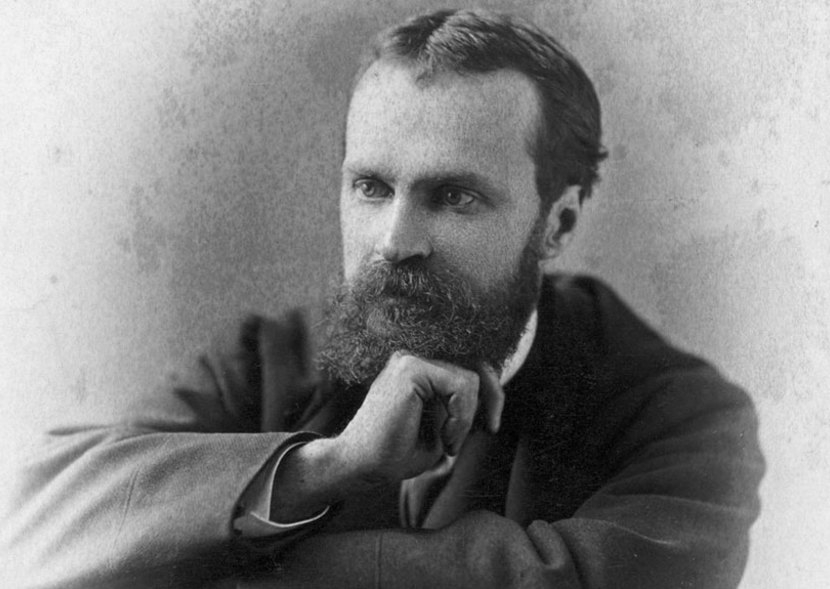
Within James’s psychological framework, mystical states operate as profoundly authoritative thresholds of cognition, standing entirely distinct from vague emotional turbulence or arbitrary irrationality. These boundary experiences carry a definitive “noetic quality” — a direct sense of illumination into deeper strata of reality — even while fundamentally resisting standard conceptual formulation.
James records this epistemic phenomenon by stating that mystical states:
“are states of insight into depths of truth unplumbed by the discursive intellect.”
This observation demonstrates that instead of dismissing the experience due to its transcendence of ordinary reasoning, the intellect recognizes a modality of understanding that remains profoundly meaningful while standing entirely prior to discursive thought. Consequently, historical religious traditions emerge as structured attempts to interpret, preserve, and communicate these primary encounters. Doctrines, dogmas, and sacred symbols function as secondary articulations of immediate experiences that can never be fully reduced to rigid logical categories. What begins as a direct, unmediated encounter with the absolute source becomes stabilized and mapped over time through language, theology, and institutional community. What Meta-Para-Ontology maps as a necessary structural encounter with the absolute limit of conceptual determination, James rigorously documents through concrete, empirical examples of individuals confronting this identical boundary within lived human experience.
A Shared Philosophical Motif
The remarkable convergence of these independent thinkers establishes a profound, unified philosophical situation across disparate traditions and divergent historical epochs. Within this shared landscape, rigorous rational inquiry systematically advances to a precise threshold where reality remains intensely present and meaningful while steadfastly resisting final conceptual determination. Meta-Para-Ontology approaches this historical convergence structurally; the boundary clarified through the threshold of Meta-Actualization marks the exact locus where formal ontology successfully fulfills its descriptive capacity, and where philosophical reflection encounters that which can never be stabilized as a localized object of knowledge. Consequently, the variant languages of paradox, incomprehensibility, or ineffability emerging across global lineages clarify themselves as diverse, structurally consistent responses to the identical limit experienced from alternative intellectual directions. Seen in this light, the extensive map of philosophical and religious history operates as an indispensable record of repeated, structured attempts to articulate a primary domain that human thought can approach but can never exhaust — a transcendent horizon toward which inquiry continuously orients itself even where formal conceptual determination can no longer proceed.
VI. Realization as Beginning: Sri Aurobindo and the Continuation of Manifestation
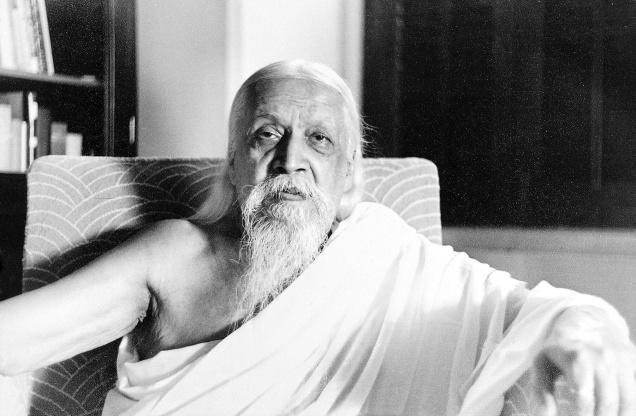
Sri Aurobindo (1872–1950) remains a highly significant philosophical anchor within modern Indian metaphysics, offering a conceptual precision that has deeply informed the perspective from which the Meta-Para-Ontology model was developed. While the framework does not claim absolute synchronicity with his integral system, the influence of his cosmological insights upon the architecture of MPO is undeniable. His extensive exploration of the complex relationship between witnessing consciousness and dynamic manifestation, alongside the eternal coexistence of unity and multiplicity, provides a vital reference point for mapping the parameters of realization. At this stage of inquiry, his insights become exceptionally relevant as the analysis converges upon the boundary conditions of Meta-Actualization and what this structural clarification implies for the cycle of existence itself.
Beyond Liberation
Sri Aurobindo’s philosophy and yoga emerged from an unusual synthesis of spiritual experience, philosophical reflection, and engagement with the evolutionary meaning of existence itself. While deeply rooted in the Vedantic and yogic traditions of India, his work departed from many traditional formulations of his time by refusing to regard liberation — understood as release from the cycle of becoming and withdrawal into a transcendent spiritual absoluteness — as the final goal of realization.
What distinguishes his position is not a rejection of realization itself, but a refusal to regard manifestation as superfluous or as something that must ultimately be abandoned or negated within spiritual experience. For Sri Aurobindo, realization does not culminate in a single exclusive metaphysical conclusion; it discloses a reality capable of expressing itself through multiple valid standpoints of consciousness. The great philosophical debates of Indian thought — non-duality, qualified unity, and dualism — transcend competing doctrinal claims to emerge as partial articulations of different modes and depths of spiritual experience.
Sri Aurobindo expresses this insight directly:
“This is the teaching of the Vedanta as we have it in its oldest form in the Upanishads. Adwaita, Vishishtadwaita, Dwaita are merely various ways of looking at the relations of the One to the Many, and none of them has the right to monopolise the name Vedanta. Adwaita is true, because the Many are only manifestations of the One. Vishishtadwaita is true because ideas are eternal and having manifested, must have manifested before and will manifest again, — the Many are eternal in the One, only they are sometimes manifest and sometimes unmanifest. Dwaita is true, because although from one point of view the One and the Many are eternally and essentially the same, yet, from another, the idea in its manifestation is eternally different from the Intelligence in which it manifests. If Unity is eternal and unchangeable, duality is persistently recurrent. The Spirit is infinite, illimitable, eternal, and infinite, illimitable, eternal is its stress towards manifestation filling endless space with innumerable existences.” — Sri Aurobindo, Essays in Philosophy and Yoga: The Stress of the Hidden Spirit.
Paradox, in this context, marks the transition of experience beyond the mind’s analytical divisions. Unity and multiplicity, transcendence and manifestation, alongside personality and impersonality, unfold as simultaneous facets of a reality that inherently resists conceptual exclusivity. Sri Aurobindo addresses this insight with arresting directness in conversations with his disciples, reframing doctrinal disputes as mere variances of standpoint and distinct orientations toward a shared truth.
“Shankara is right and so also are Madhwa and Nimbarka. Only, when they state their truths in mental terms there is a tremendous confusion. Shankara says, ‘Duality does not exist and all is one.’ Madhwa says, ‘There is duality.’ Nimbarka says, ‘There is Bheda-bheda, there is division and yet no division.’ When the mind tries to understand these things, it takes up fragments and treats them as the whole and makes unreal distinctions. People speak of Nirguna as fundamental and Saguna as secondary, but both personality and impersonality are aspects of one thing which is indivisible. The Truth is infinite. There are so many different ways to come to the Truth. The wider you become, the higher you go, the more you find that there is still more and more.”
— Sri Aurobindo, Talks with Sri Aurobindo, recorded by A. B. Purani and Nirodbaran, 29 December 1938
Sri Aurobindo approaches the tension between unity and difference by locating its origin in the activity of mind itself, whose operation depends upon distinction and exclusion. When consciousness moves beyond this mode, the conflict loses its force and no longer requires logical reconciliation. As he explains in Letters on Yoga:
“The Shankara knowledge is only one side of the Truth; it is the knowledge of the Supreme as realised by the spiritual Mind through the static silence of pure Existence. Unless one realises the Supreme on the dynamic as well as the static side, one cannot experience the true origin of things and the equal reality of the active Brahman. The Supermind reconciles what to the mind are oppositions; for it is the mind that creates the problem by erecting oppositions between aspects of the Divine which are not really opposed to each other but are one and inseparable.”
— Sri Aurobindo, Letters on Yoga, Book II: The Integral Yoga and Other Spiritual Paths
These reflections clarify how the coexistence of Advaita, Dvaita, and Bhedabheda traditions reflects distinct modes of realization, each seeking to articulate a reality that naturally evades exclusive determination and remains inexhaustible by any single metaphysical formulation.
Sri Aurobindo preserves the paradox as an intrinsic feature of this vision, wherein unity and multiplicity unfold as simultaneous expressions of an indivisible reality. From this perspective, philosophical and spiritual traditions operate as distinct articulations originating at varying depths of experience. Each lineage accentuates particular facets of the Absolute, precisely because it crystallizes from a specific mode of realization and structures its language around that unique encounter. Consequently, surface-level dogmatic friction reflects differences in standpoint within experience itself, rather than a fundamental contradiction. Within the coordinate architecture of Meta-Para-Ontology, these variances correspond directly to distinct ontological thresholds of description. Sacred teachings do not merely propose intellectual theories about reality; they speak as testimonies from positions systematically formed within it.
Ontology therefore serves primarily as an orienting discipline. It clarifies the locus from which a teaching speaks and the specific dimension of experience it conveys, placing diverse formulations within a single, continuous spectrum of manifestation. Consequently, the plurality of philosophical and religious visions unfolds as a progressive unveiling of one existential reality encountered from multiple experiential standpoints.
Within Meta-Para-Ontology, the analysis repeatedly engages with religious and philosophical traditions whose insights emerge from experiences situated at the threshold of Meta-Actualization or its trans-ontological beyond. Such traditions do not merely propose belief systems; they articulate distinct modes of experience wherein the relation between consciousness and manifestation undergoes a fundamental transformation.
Sri Aurobindo’s vision of realization avoids a terminal withdrawal from existence, exploring instead the capacity of realized consciousness to remain within the manifest order, actively participating in the progressive transformation and evolution of life on Earth. Engagement with his writings thus becomes indispensable for approaching a wide range of complex ontological dilemmas, specifically those that extend to the very limits of description.
Bibliography
Nicholas of Cusa. On Learned Ignorance (De Docta Ignorantia). Translated by Jasper Hopkins. Minneapolis: Arthur J. Banning Press, 1981.
Frank, Semyon L. The Incomprehensible (Nepostizhimoe). Originally published 1939. Translated by Boris Jakim. Athens, OH: Ohio University Press, 2014.
James, William. The Varieties of Religious Experience: A Study in Human Nature. New York: Longmans, Green, 1902.
Sri Aurobindo. Essays in Philosophy and Yoga. Pondicherry: Sri Aurobindo Ashram Publication Department, 1998.
Sri Aurobindo. Letters on Yoga. Vol. II. Pondicherry: Sri Aurobindo Ashram Publication Department, 2015.
Sri Aurobindo. Talks with Sri Aurobindo. Recorded by A. B. Purani and Nirodbaran. Pondicherry: Sri Aurobindo Ashram Publication Department, 2007.